
Confidence Isn't What Most People Think It Is

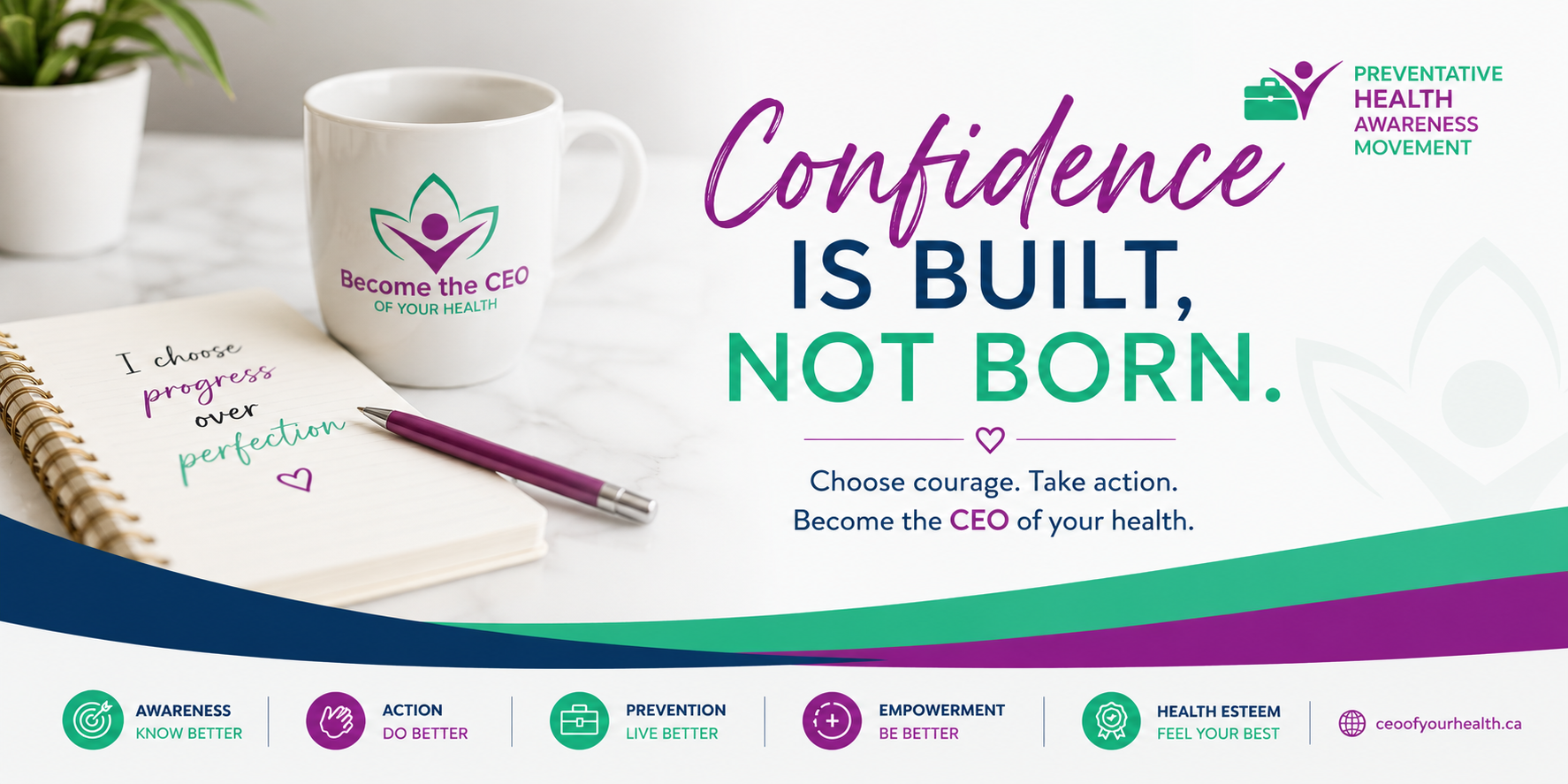
Lately, I've been thinking a lot about confidence.
Not because I've suddenly figured it out. Quite the opposite.
The more people I meet, the more successful individuals I interview, and the more conversations I have with healthcare professionals, entrepreneurs, leaders, and everyday people, the more I've realized something interesting:
Most of us are getting confidence completely wrong.
We tend to look at someone who appears successful and assume confidence came first.
We see the business owner confidently leading a team.
The speaker standing on a stage, the healthcare practitioner educating a room full of people or the athlete competing.
The person who seems to have their life together.
And we think:
"Wow. They're so confident."
What we don't see are the years of self-doubt. The mistakes. failures, criticism and the uncomfortable conversations.
The times they questioned themselves or the moments they wanted to quit.
Because here's what I've come to believe:
Confidence isn't something you're born with. Confidence is something you build.
And like any muscle, if you want it to get stronger, you have to use it.
One of the biggest surprises for me over the years has been learning that many of the people I admire most still experience fear, uncertainty, and self-doubt.
The difference isn't that they're fearless.
The difference is that they've learned to move forward anyway.
That's confidence. Not the absence of fear.
The willingness to act despite it.
In fact, research on self-efficacy by psychologist Albert Bandura suggests that confidence grows through experience. We become more confident when we repeatedly do hard things and discover we're capable of handling them.
Not because the task gets easier, because we get stronger.
And maybe that's where confidence really begins.
Not with certainty but with trust.
Trust that you'll figure it out.
Trust that you'll recover if things don't go according to plan.
Trust that even if you fail, you'll learn something valuable from the experience.
One thing I wish more people understood is that confidence has very little to do with perfection.
Some of the most confident people I know are also the quickest to admit when they're wrong. They're open to constructive criticism and they're willing to learn.
They're willing to pivot and say, "I don't know."
Ironically, that openness is often what makes them appear so confident.
Because confidence isn't pretending to have all the answers.
It's being secure enough to keep learning.
I also think confidence and resilience are deeply connected.
Many of us assume confidence comes from success.
But when I look back at my own life, the moments that built the most confidence weren't the victories.
They were the setbacks I survived, the challenges I worked through.
The times I fell down and got back up or 'failed forward" as my Dad always encouraged me to do.
Those experiences taught me something important:
I can handle more than I think.
And maybe that's the real definition of confidence.
Not believing that everything will go perfectly.
But believing that you'll be okay even if it doesn't.
So if you're waiting to feel confident before taking the next step, starting the business, having the conversation, trying something new, applying for the opportunity, or making a change in your life to improve your heatlh......
You may be waiting forever.
Confidence doesn't usually show up first.
Action does. Confidence follows.
One courageous step at a time.
And perhaps that's why becoming the CEO of your health and your life, isn't about having everything figured out.
It's about being willing to keep showing up, learning, growing, failing forward, and trusting yourself along the way.
Because confidence isn't perfection.
It's self-trust in motion.