Who’s Really in the Driver’s Seat?

Reclaiming Your Subconscious Mind to Become the CEO of Your Health
If we truly want to lead our health, our life, and our future, we must first understand who is really in the driver’s seat.
Because leadership, especially self-leadership doesn’t begin with willpower. It begins with awareness.
Most people believe it’s their conscious mind, the part of us that sets goals, makes plans, and decides to “do better.” But neuroscience tells a very different story.
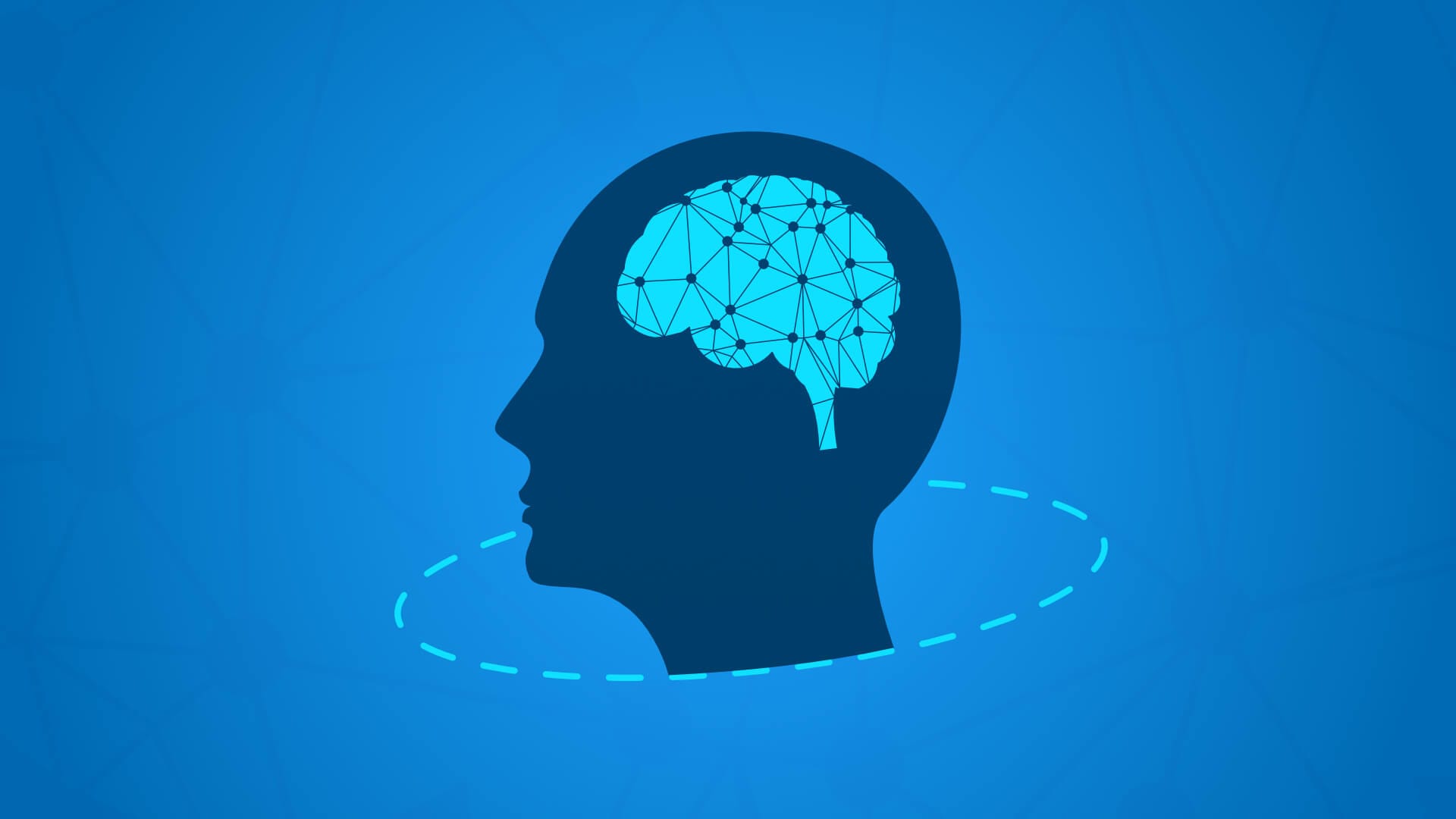
More than 95% of our daily functioning is driven by the subconscious mind. The conscious mind, the part we often rely on for change accounts for only about 5%.
What matters most is not the exact number of thoughts we have each day, but the reality that many of our thoughts are habitual and automatic. The brain is designed for efficiency, which means it often defaults to familiar patterns, especially those shaped by past experiences, stress, or perceived threat.
If we are not aware of these patterns, we are not leading, we are reacting.
And when it comes to health, reaction is costly.
The Subconscious Mind: Powerful, Protective, and Patterned
The subconscious mind is not the enemy. It is brilliantly designed to keep us safe, efficient, and alive.
It stores:
- Past experiences
- Emotional memories
- Learned beliefs
- Generational narratives
- Trauma responses
- Identity stories about who we are and what is possible
The challenge is that the subconscious mind does not evaluate truth, it evaluates familiarity.
If you learned early on that rest equals laziness, your nervous system may resist recovery. If you learned that your needs come last, boundaries may feel unsafe. If you experienced trauma, your body may stay on high alert even when the threat is gone.
Over time, these subconscious patterns shape:
- Stress physiology
- Inflammation
- Pain perception
- Sleep quality
- Self-worth
- Decision making
- Boundary setting
- Health behaviors
This is why two people can receive the same diagnosis, the same treatment plan, and have completely different outcomes.
One is leading consciously. The other is being led subconsciously.
Health Is Not Just Biological—It Is Behavioural, Emotional, and Neurological
Modern science increasingly supports what integrative and preventative health practitioners have long observed: the mind and body are not separate systems.
As a Registered Massage Therapist with over three decades of clinical experience, I have witnessed this truth firsthand. On the treatment table, it becomes unmistakably clear how stress, unprocessed experiences, belief systems, and subconscious patterns can show up in the body, impacting pain, recovery, resilience, and overall health outcomes in ways that anatomy alone cannot explain.
Research in psychoneuroimmunology shows that thought patterns, emotional states, and chronic stress directly influence:
- Hormonal regulation
- Immune function
- Pain sensitivity
- Cardiovascular health
- Gut-brain signalling
When subconscious beliefs remain unexamined, they can quietly sabotage even the best intentions:
“I know what to do, I just can’t seem to do it.”
That statement is not a failure of discipline. It is a signal of subconscious conflict.
Neuro-Linguistic Programming: Reclaiming the CEO Seat
Neuro-Linguistic Programming (NLP) is a communication and personal development approach that explores the powerful relationship between how we think, how we use language, and how we behave.
At its core, NLP links:
- Neurological processes (Neuro): how our nervous system receives and processes information through our senses
- Language (Linguistic): the words we use internally and externally to interpret and give meaning to our experiences
- Behavioral patterns (Programming): the learned habits, reactions, and responses that shape how we show up in the world
Developed in the 1970s by Richard Bandler and John Grinder, NLP was originally designed to study and model what effective, resilient, and high performing individuals do differently. The goal was simple but revolutionary: if we can understand the patterns behind success and well-being, we can learn and apply them intentionally.
NLP uses practical techniques to:
- Identify and interrupt automatic thought patterns
- Reframe limiting or outdated beliefs
- Improve communication and emotional regulation
- Strengthen confidence, self-awareness, and personal agency
From a self-leadership and preventative health lens, NLP offers something especially valuable: a way to recognize when subconscious programming is driving our choices and how to consciously rewrite it.
When we understand how thoughts, language, and nervous system responses interact, we move out of autopilot and back into authorship.
This is what it means to reclaim your CEO of your Health seat.
Body Awareness: Where Change Becomes Tangible
One of the most powerful outcomes of NLP is improved body awareness.
When individuals learn to listen to the signals beneath the story, tightness, shallow breathing, jaw clenching, gut sensations, they reconnect with the intelligence of their body.
This awareness allows for:
- Earlier stress intervention
- Improved pain modulation
- Better recovery
- More intuitive boundary setting
- More compassionate self-leadership
The body often knows the truth long before the mind catches up.
When the Narrative Is Not the Truth—Just the Program
Perhaps the most liberating realization is this:
A belief does not have to be true to feel real.
Many subconscious narratives were formed in moments of survival, not wisdom. They were adaptive once but they may be limiting now.
What we repeat internally becomes what the nervous system organizes around. Over time, these internal programs influence posture, breathing, pain perception, immune response, and even the boundaries we believe we are allowed to set.
The work of self-leadership is learning to pause long enough to question the program instead of unconsciously obeying it.
What the Research Is Beginning to Show
While Neuro-Linguistic Programming (NLP) has long been used in coaching, leadership, and performance environments, formal scientific research is still evolving.
More recent applied research, however, is beginning to explore NLP’s value in specific contexts, particularly around psychological empowerment, cognitive flexibility, emotional regulation, and resilience, all of which are foundational to sustainable health behaviours.
Emerging studies within healthcare and high stress professional environments suggest that NLP-informed education may support:
- Improved emotional self-regulation
- Increased sense of personal agency
- Greater adaptability under stress
- Enhanced awareness of thought–emotion–behavior loops
From a preventative health lens, this is significant. These factors directly influence nervous system regulation, stress physiology, and long-term health decision-making.
NLP is not positioned as a replacement for medical or psychological care but rather as a self-leadership skillset that helps individuals become more aware, more intentional, and less reactive.
NLP as a Preventative Health Tool
Within the Preventative Health Toolbox, NLP fits as a subcategory focused on subconscious awareness and narrative leadership.
Just as we train mobility, nutrition, sleep, and stress management, we can also train:
- Thought awareness
- Language precision
- Emotional reframing
- Identity beliefs
When individuals learn to work with their subconscious mind rather than against it, health behaviours become less about force and more about alignment.
A Trusted Voice in the Space: Marsha Vanwynsberghe
Marsha Vanwynsberghe is a powerful example of how NLP principles can be applied in real life, not just theory.
As a self-described science-minded thinker, Marsha’s journey underscores an important truth: especially when you are analytical and evidence-oriented, understanding the subconscious mind becomes even more critical.
Through her work as an NLP trainer, speaker, author, and host of the podcast Own Your Choices, Own Your Life, Marsha explores how language, identity, and subconscious safety patterns shape our health, relationships, leadership, and future possibilities.
Her story offers living proof that when we lean in, get curious, and do the inner work, even when it feels uncomfortable. Profound shifts are possible across every area of life.
This is self-leadership in action.
Your Subconscious Mind Toolbox: A Preventative Health Essential
Here are a few tangible ways to begin integrating NLP into your preventative health practice:
📘 Recommended Reading
- The Structure of Magic (Vol. I & II) — Richard Bandler & John Grinder
- Frogs into Princes — Richard Bandler & John Grinder
- When She Stopped Asking Why — Marsha Vanwynsberghe
These resources explore how internal maps, language patterns, and belief systems shape lived experience.
A Simple NLP Exercise You Can Try Today
The Subconscious Story Rewrite
- Identify the Loop
Notice a recurring internal statement related to your health or self-care. - Name the Emotion
What feeling arises when this thought appears? - Challenge the Narrative
Ask yourself: Is this absolutely true? Or is it familiar? - Reframe With Choice
Create a new statement that feels grounded, supportive, and realistic. - Anchor It in the Body
Pair the new statement with a slow breath or grounding gesture to reinforce nervous system safety.
This practice interrupts autopilot, builds awareness, and creates space for intentional leadership.
From Autopilot to Authority
Becoming the CEO of your Health is not about controlling every outcome.
It is about understanding the systems—biological, neurological, emotional, and subconscious that are already at work within you.
When you learn to recognize, pause, and reframe subconscious patterns, you reclaim choice.
And choice is the foundation of self-leadership.
Your subconscious mind is already powerful.
The question is: are you leading it, or is it leading you?
Your Next Step: Lead Your Health—On Purpose
If this conversation sparked curiosity, awareness, or even a sense of “this explains so much,” that’s not accidental.
Self-leadership is a skill and like any skill, it can be learned, practiced, and strengthened in the right environment.
In January 2026, I am so excited to launch my CEO of Your Health HUB & Community. A preventative health ecosystem designed for people who are ready to move beyond information and into intentional leadership of their health, energy, and future.
Inside the HUB, you’ll find:
- The Become the CEO of Your Health Signature Course
- Tools and frameworks that integrate body, mind, nervous system, and subconscious leadership
- Educational content grounded in science and lived experience
- A supportive community of individuals committed to prevention, resilience, and self-agency
This is not about doing more. It’s about leading differently.
If you’re ready to step out of autopilot and into authorship— If you’re ready to build a preventative health toolbox that includes your body and your subconscious mind
👉 Learn more & Join the waitlist for the CEO of Your Health HUB & Community
Because your health deserves leadership. And you are capable of far more than you’ve been programmed to believe.